Let’s try and clear a few basics up first. When SP is first installed it pre-creates a small pool of user groups and permissions sets and all existing registered users of the website are placed into the ‘members’ user group. The permission sets are basic permission templates that probably have the options needed for the average user. However, we would always encourage people to create their own.
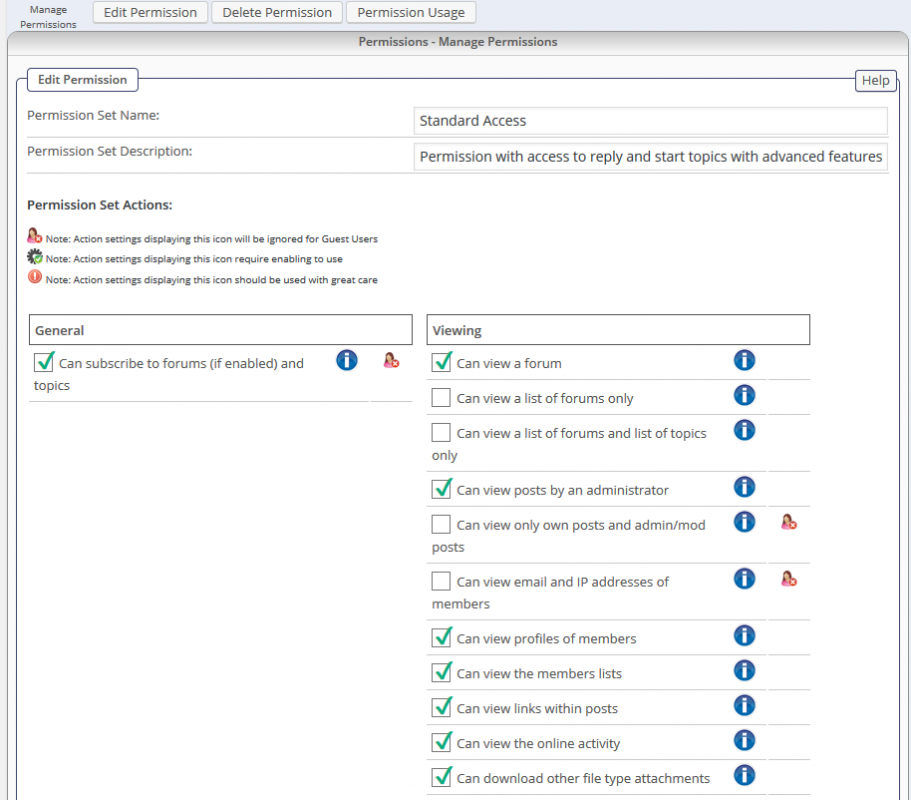
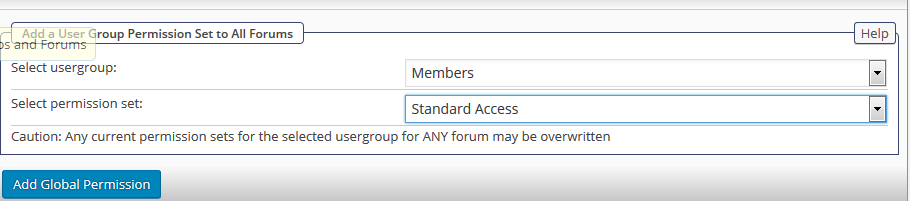
Then, when you create forum groups and forums, you need to add to each one the permutations of user groups and permission sets desired. So yes – as per your illustration – a ‘members’ user group might have the ‘standard access’ permission set. Setting these permission/user group assignments when you create the forum group, will then allow those assignments to be automatically applied to each forum created within the group. Otherwise they will need to be made for each forum defined.
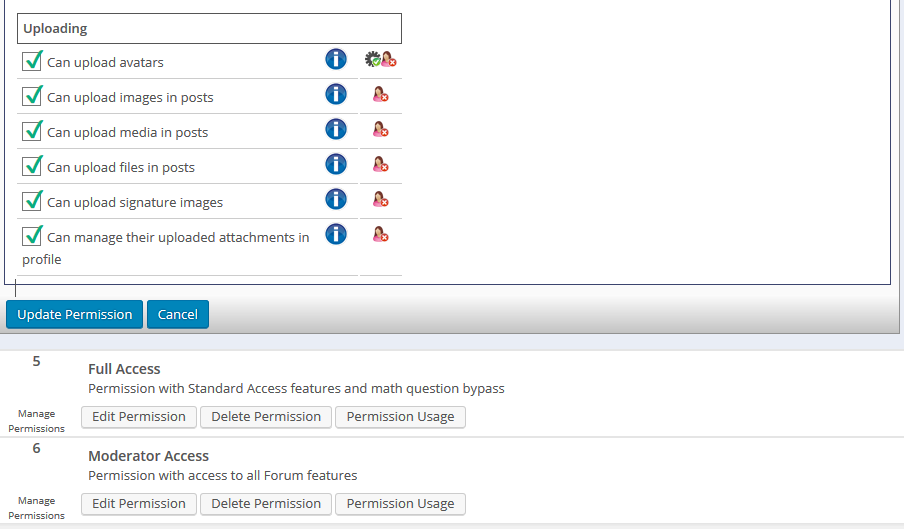
To see at a glance which user groups are set up for which forums – go to the ‘Manage User Groups’ listing, select the group to look at and click on the ‘User Group usage’ button. There is an equivalent informational listing for the Permission Sets as well.
To see an individual users access – use the members list on the public/front end of the forum, locate the member to look up and click on the profile link. When their profile pops up, click on edit profile in the heading at the top. In the final profile editing forms select the ‘Permissions’ tab which will give you a listing of all the forums and for each one the permissions the specific user has.
So all of that is by way of information to try and help you troubleshoot. It is worth stating that the majority of membership plugins we have heard of seem to work just fine but there are some caveats and one or two that have not behaved in the past. WordPress communicates with plugins via what are called ‘hooks’. for the non-techie I always suggest you think of these as ‘messages’. When a new user registers, WP broadcasts a message and plugins can listen out for this and act accordingly. SP, for example, allocates them into whatever default user group you have selected for the purpose (initially ‘members’).
Any membership plugin that replaces the WP registration process must continue to send these messages for other plugins to work as expected. As I said, we have encountered one or two in the past that fail to do this. However, if new registrants are being added to the default SP user group then there is probably no need to worry about that.
IF your members ARE in an SP User Group AND your forum(s) have an assignment for that User Group with an appropriate Permission Set then those members should, of course, be able to see and use that forum using the permissions defined.
If for any reason members are unaccounted for then go to the user groups section of the admin and open the ‘map users to user groups’ and use the tools there to rebuild user groups. In fact you mentioned a ‘participant’ role which is not a standard WP defined role so it may well be a good idea to make this visit and ensure all is well.
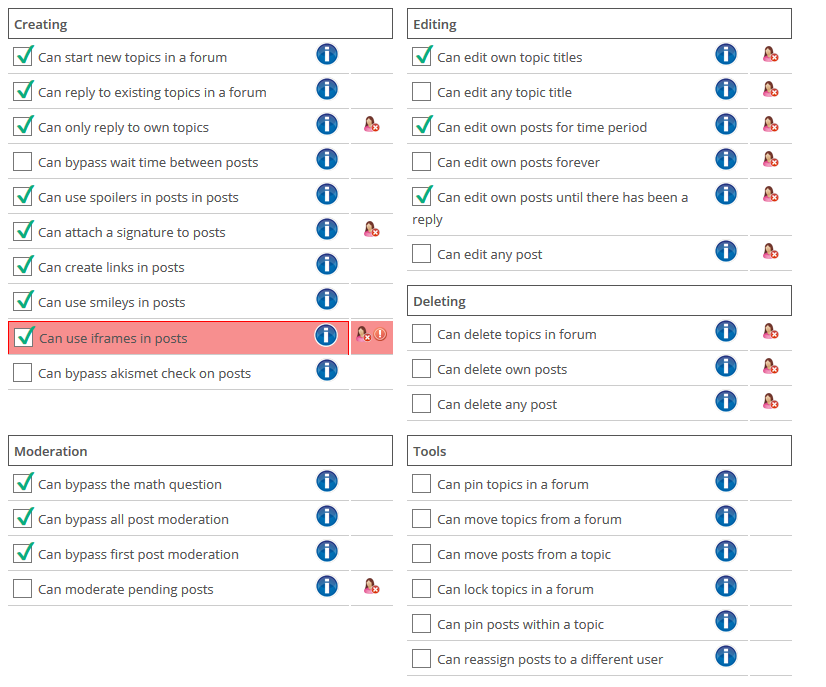
After which you need to carefully review the permissions being assigned. Some permissions can override others. For example I see that you have both ‘Can reply to existing topics’ AND ‘Can only reply to own topics’ checked. I believe you will find that the latter will win out stopping users from replying to others.
Finally I see you have noted the ‘reset auths cache’ tool in the toolbox. A members permission/forum data is cached in a column in their members record to help performance. When changes are made to groups or sets we do clear thus data out and then it is rebuilt the next time a user makes a visit. Under normal circumstances there should be no need to run a manual reset but it is available should any corruption or unseen circumstance crop up and can be used at any time to clear the decks.